 Tilda
Tilda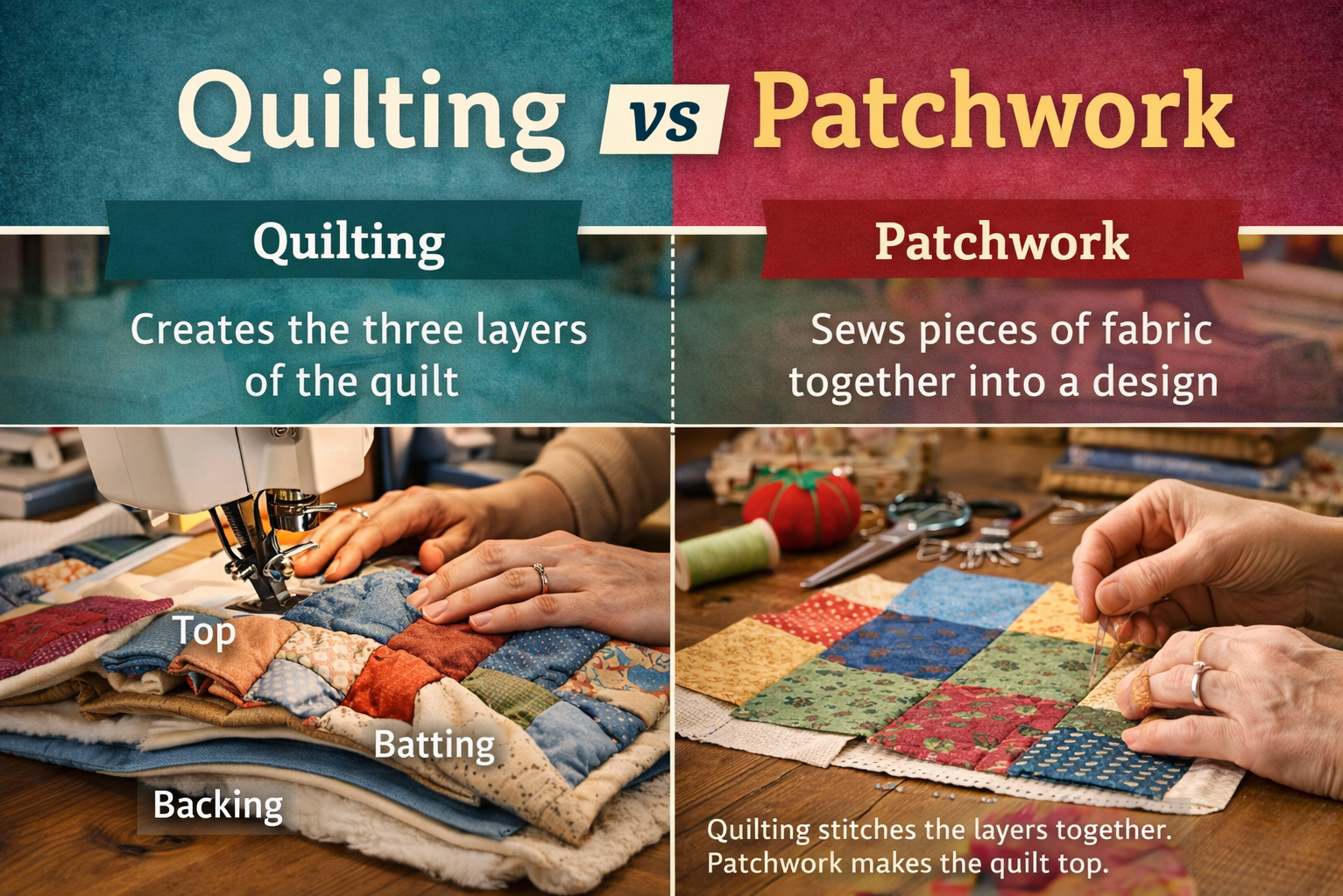
If you’re new to quilting, one of the most common questions you’ll see is: What’s the difference between quilting and patchwork? The two terms are often used interchangeably, but they actually refer to different parts of the quilt-making process.
This beginner-friendly guide will clearly explain the difference, how they work together, and why understanding this distinction matters.
What Is Patchwork?
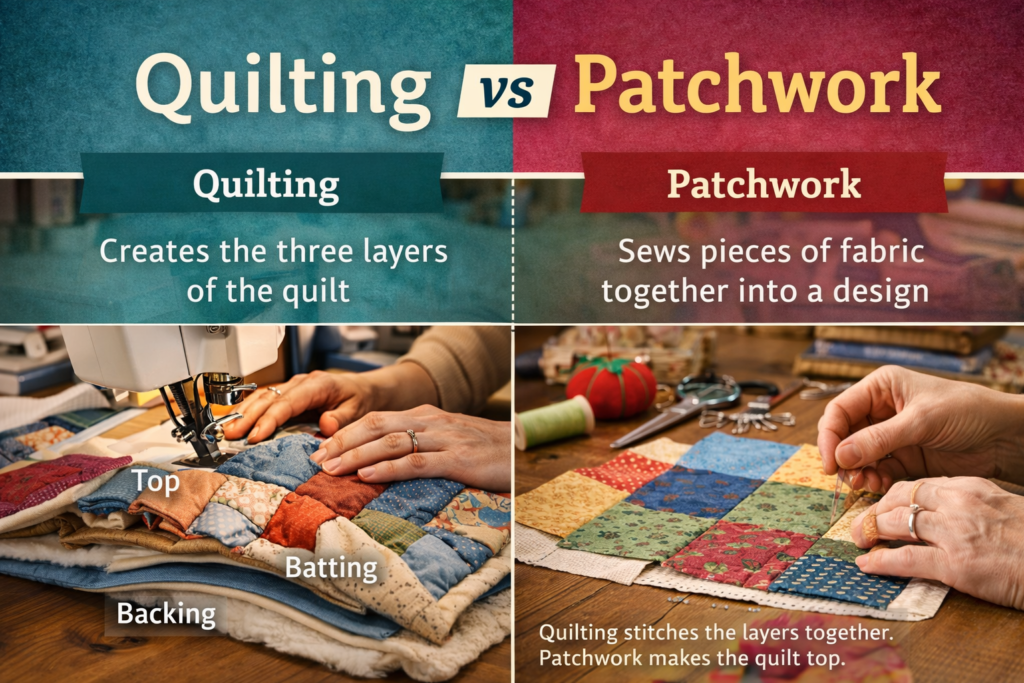
Patchwork is the process of sewing smaller pieces of fabric together to create a larger design. These pieces can be different colors, patterns, or textures, arranged in a specific pattern or block layout.
Patchwork focuses on:
- Fabric selection
- Color combinations
- Block design
- Precision cutting and piecing
The result of patchwork is the quilt top, which is the decorative upper layer of a quilt.
What Is Quilting?
Quilting is the step where the three quilt layers are stitched together:
- Quilt top (often made with patchwork)
- Batting (the middle layer)
- Backing fabric
The stitching that holds these layers together is also called quilting. It adds texture, strength, and visual interest to the finished quilt.
Quilting vs Patchwork: Key Differences
| Patchwork | Quilting |
|---|---|
| Creates the quilt top | Joins all quilt layers together |
| Focuses on design and layout | Focuses on stitching and structure |
| Uses piecing techniques | Uses stitching patterns |
| Happens first | Happens after patchwork |
In simple terms: patchwork builds the design, quilting finishes the quilt.
Do All Quilts Use Patchwork?
No. While many quilts are made with patchwork, not all quilts use it.
Some examples include:
- Whole cloth quilts, made from a single piece of fabric
- Appliqué quilts, where shapes are sewn onto a base fabric
However, patchwork quilts are the most popular choice for beginners because they are flexible and forgiving.
Is Patchwork Easier Than Quilting?
For many beginners, patchwork feels easier because it involves straight seams and basic cutting. Quilting, especially free-motion quilting, may take more practice.
That said, both skills improve with time, and beginners can absolutely learn both step by step.
Should Beginners Learn Patchwork or Quilting First?
Beginners should start with patchwork, then move on to quilting.
A simple learning path looks like this:
- Learn basic patchwork blocks
- Assemble a quilt top
- Add batting and backing
- Quilt the layers together
This approach builds confidence and prevents frustration.
Common Beginner Mistakes
- Thinking patchwork and quilting are the same thing
- Skipping proper cutting and measuring during patchwork
- Rushing the quilting step
Understanding the difference helps you avoid these issues early on.
Final Thoughts
Patchwork and quilting are closely connected, but they serve different purposes in quilt-making. Patchwork creates the visual design, while quilting brings everything together into a finished, functional piece.
Once you understand this distinction, learning quilting becomes much clearer — and far more enjoyable.
If you’re just starting out, focus on simple patchwork projects and let your quilting skills grow naturally from there.