
 Tilda
Tilda
Finishing is what separates a homemade crochet piece from a truly professional one. Even when stitches are well executed and patterns are followed perfectly, poor finishing can undermine hours of hard work. On the other hand, mastering professional crochet finishing methods elevates your projects, giving them structure, durability, and a refined appearance worthy of sale, gifting, or display.
In this article, you’ll learn the essential techniques used by experienced crocheters to create clean edges, invisible joins, smooth seams, and flawless final touches. These methods apply to garments, blankets, home décor, and accessories alike.
Why Finishing Matters in Crochet
Finishing is the final stage of a crochet project, but it should never be treated as an afterthought. Professional finishing ensures:
- Stronger and longer-lasting pieces
- Clean edges and consistent shape
- Invisible joins and secure seams
- Improved drape and structure
- Higher perceived value of handmade items
Many advanced crocheters agree that finishing skills often matter more than complex stitch patterns.
Weaving in Ends the Professional Way
One of the most common mistakes beginners make is rushing through the weaving-in process. Professional crochet finishing methods prioritize security and invisibility.
Best Practices for Weaving in Ends
- Always weave ends in at least three different directions
- Follow the natural path of the stitches
- Split yarn plies when possible for extra hold
- Avoid knots, especially in garments
For slippery fibers like bamboo or silk blends, weaving in ends over a longer distance is essential to prevent unraveling.
Invisible Color Changes and Joins
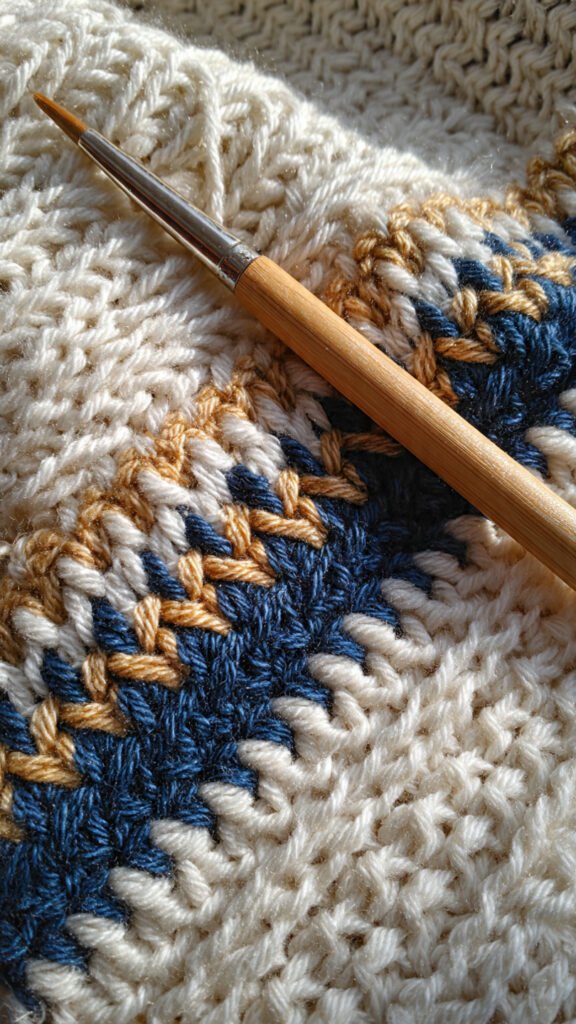
Color changes and joins can easily disrupt the visual flow of a project. Professionals use specific techniques to keep transitions smooth.
Invisible Color Change Technique
This method is ideal for colorwork, stripes, and motifs:
- Complete the last yarn over of the stitch with the new color
- Pull the new color through cleanly
- Tighten gently to avoid gaps
This creates a seamless transition with no visible step between colors.
Standing Stitches for New Rows
Instead of slip stitching and chaining, standing stitches allow you to begin a new row with a fresh color while maintaining stitch height and tension.
Seamless and Flat Seaming Methods
Seaming is one of the most important professional crochet finishing methods, especially for garments and modular projects.
Mattress Stitch for Crochet
This stitch creates nearly invisible seams and works well for:
- Sweaters and cardigans
- Blankets made of panels
- Crochet bags and cushions
The key is to align stitches carefully and maintain even tension throughout the seam.
Slip Stitch Join for Motifs
For granny squares and motifs, slip stitch joins provide:
- Flat, clean connections
- Minimal bulk
- A decorative yet subtle finish
Joining from the wrong side often results in a neater appearance.
Blocking: The Secret to a Professional Shape
Blocking transforms a finished crochet piece into its final form. Skipping this step is one of the biggest differences between amateur and professional results.
Types of Blocking
Wet Blocking
Best for natural fibers like cotton and wool. The piece is soaked, shaped, and left to dry completely.
Steam Blocking
Ideal for acrylic blends. Steam relaxes stitches without soaking the yarn.
Spray Blocking
A gentle option for delicate items or light shaping.
Blocking evens stitches, straightens edges, and enhances stitch definition.
Edge Finishing and Border Techniques
Clean edges frame your crochet project and hide minor imperfections.
Single Crochet Edge
A simple and effective option that:
- Straightens uneven sides
- Adds durability
- Creates a clean outline
Using a smaller hook often results in a sharper finish.
Crab Stitch (Reverse Single Crochet)
This stitch adds texture and a professional decorative edge, perfect for blankets, bags, and garments.
Professional Buttonbands, Closures, and Fastenings
For garments and accessories, closures must be both functional and attractive.
Reinforced Buttonbands
To prevent stretching:
- Use tighter stitches
- Add slip stitch reinforcement
- Work buttonbands perpendicular to the fabric stretch
Invisible Zippers and Magnetic Closures
Lining crochet bags and sewing in hidden closures adds structure and a high-end finish.
Lining Crochet Projects for Structure
Adding fabric lining is a hallmark of professional crochet finishing methods.
Benefits of Lining
- Prevents stretching
- Hides wrong side stitches
- Protects yarn from wear
- Improves durability
Lining is especially useful for bags, baskets, and garments.
Consistent Tension and Final Inspection
Before considering a project complete, professionals always perform a final inspection.
What to Check
- Loose stitches or gaps
- Uneven edges
- Ends that may surface over time
- Symmetry and shape
Light steaming can correct minor tension inconsistencies at this stage.
Tools That Help Achieve Professional Finishing
Having the right tools makes finishing easier and more precise.
Essential tools include:
- Yarn needles in multiple sizes
- Blocking mats and rust-proof pins
- Steam iron or garment steamer
- Sharp scissors
- Measuring tape
These tools support consistency and efficiency in finishing work.
Final Thoughts
Mastering professional crochet finishing methods is a journey that transforms your craft from hobby to art. While stitch patterns may catch the eye, finishing techniques determine quality, durability, and elegance.
By focusing on clean joins, invisible ends, proper blocking, and thoughtful detailing, you ensure every project looks intentional, polished, and truly professional. Over time, these methods become second nature — and your crochet pieces will speak for themselves.