
 Tilda
Tilda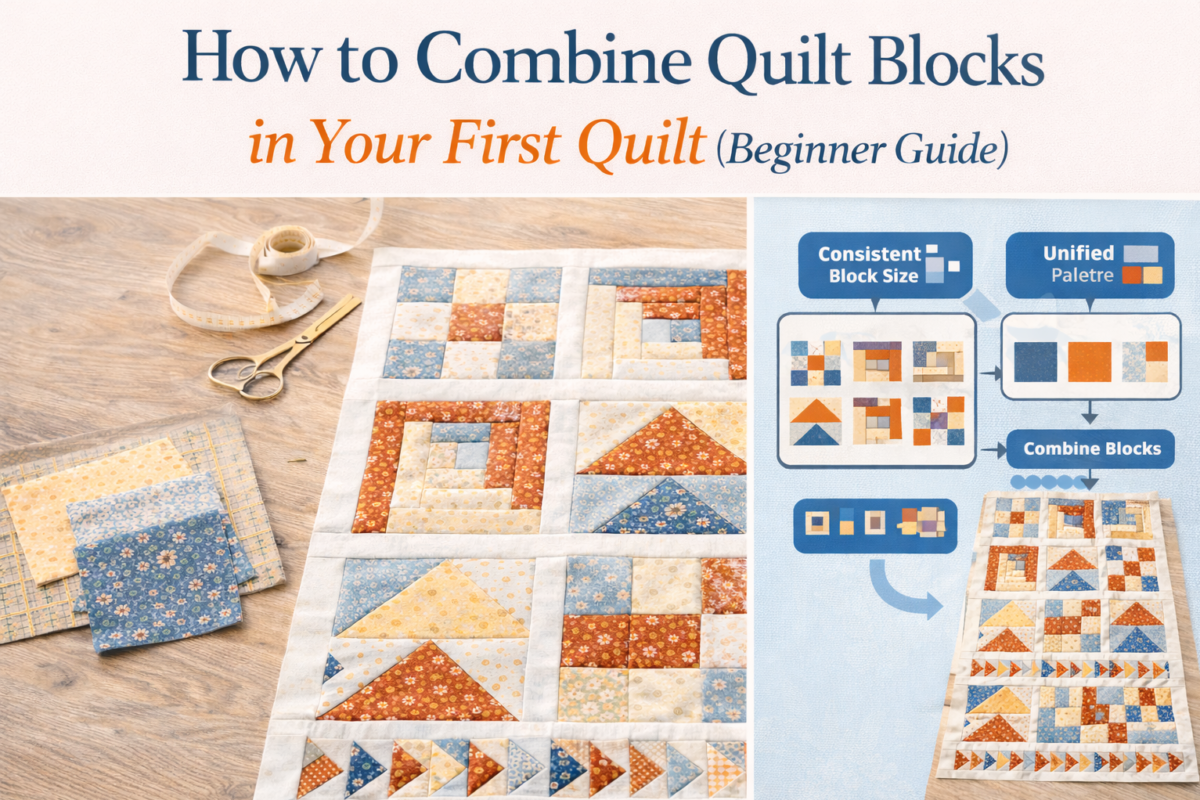
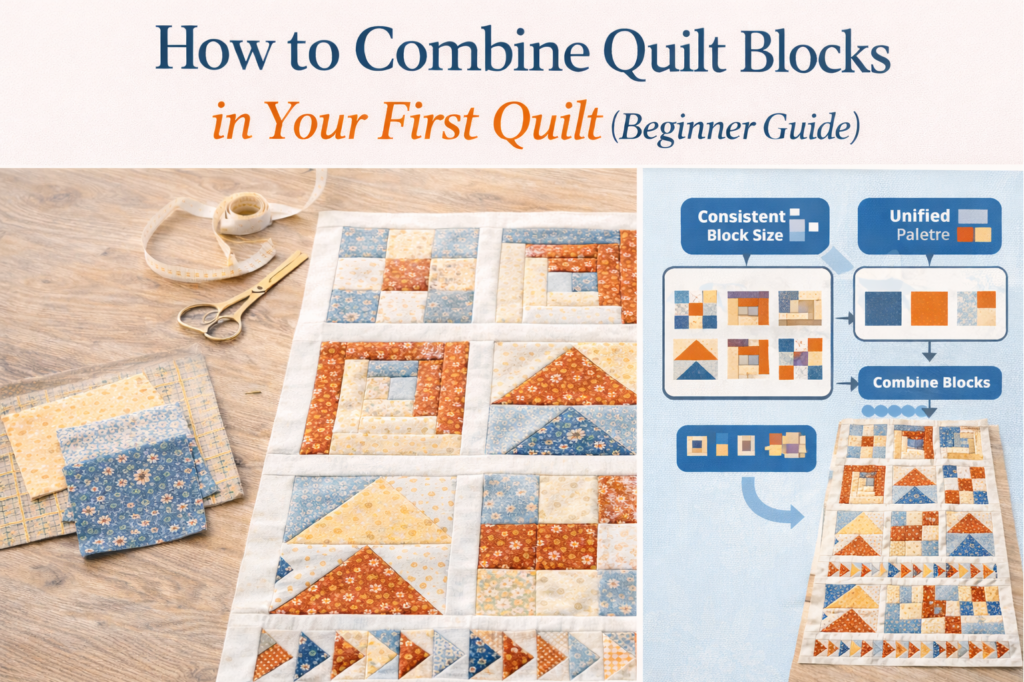
Combining quilt blocks for the first time can feel intimidating, but it doesn’t have to be. When you understand a few simple principles, mixing blocks becomes an enjoyable and creative step in your quilting journey.
This beginner-friendly guide shows you how to combine quilt blocks in your first quilt, using clear layouts, practical tips, and blocks you already know — like Nine Patch, Rail Fence, Log Cabin, and Flying Geese.
Why Combining Quilt Blocks Matters
Learning how to combine quilt blocks helps you:
- Move beyond single-block quilts
- Create visually interesting designs
- Use blocks you’ve already practiced
- Build confidence as a quilter
Your first mixed-block quilt doesn’t need to be complex to look beautiful.
Start With Compatible Quilt Blocks
Not all quilt blocks work well together — especially for beginners.
Best Blocks to Combine in a First Quilt
- Nine Patch
- Rail Fence
- Log Cabin
- Flying Geese (used in rows or borders)
These blocks share:
- Straight seams
- Clear geometry
- Beginner-friendly construction
Keep Block Sizes Consistent
This is the most important rule for beginners.
Why Block Size Matters
Blocks must finish at the same size to fit together easily.
Example:
- Nine Patch: 12″ finished
- Rail Fence: 12″ finished
- Log Cabin: 12″ finished
If sizes don’t match, you’ll need extra math — not beginner-friendly.
Use Sashing to Make Combining Easier
Sashing is fabric strips placed between blocks.
Why Beginners Love Sashing
- Hides minor size differences
- Adds breathing room between patterns
- Makes layouts easier
- Improves overall design
A simple solid sashing can make very different blocks work together beautifully.
Simple Layout Ideas for Beginners
1. Alternating Block Layout
Alternate two block types in rows.
Example:
- Row 1: Nine Patch
- Row 2: Rail Fence
This layout is balanced and easy to plan.
2. Sampler Quilt Layout
A sampler quilt uses many different blocks, each appearing once or twice.
Beginner tip:
- Repeat each block at least twice for visual balance
Sampler quilts are perfect for learning.
3. Row-Based Layout
Each row uses a different block style.
Example:
- Row 1: Log Cabin
- Row 2: Rail Fence
- Row 3: Nine Patch
This layout feels organized and beginner-safe.
Using Flying Geese With Other Blocks
Flying Geese blocks work best as:
- Borders
- Accent rows
- Directional dividers
Because they’re rectangular, they help guide the eye across the quilt.
Color Is the Secret to Cohesion
Even different blocks look unified when color is consistent.
Beginner Color Rules
- Choose 1 main color
- Add 1–2 supporting colors
- Use a consistent background fabric
This ties all blocks together visually.
Planning Your Quilt Before Sewing
Before sewing everything together:
- Lay blocks on the floor or design wall
- Take a photo to preview layout
- Adjust block rotation
- Check color balance
This step prevents regret later.
Common Beginner Mistakes (and Fixes)
❌ Mixing random sizes
✅ Standardize finished block size
❌ Too many colors
✅ Limit your palette
❌ Skipping layout planning
✅ Always test placement first
Best Quilt Projects for Mixed Blocks
Combining blocks works well for:
- First bed quilts
- Lap quilts
- Memory quilts
- Skill-building sampler quilts
These projects grow with your confidence.
Final Thoughts
Learning how to combine quilt blocks in your first quilt is a major milestone. You don’t need complex math or advanced patterns — just consistency, planning, and blocks you already know.
Start simple, trust the process, and remember: every quilt is a learning experience. Mixing blocks is where quilting truly becomes creative.
Your first combined-block quilt will be something you’re proud of